29 September
Smart Home & AV
Multiplex Acoustic Solutions: Creating an Immersive Cinema Experience
- admin-StaveraBuildTech
- 0 Comments
A memorable cinema experience depends on both picture and sound. Clear dialogue, detailed effects, and powerful music help audiences connect with the story. Achieving that experience requires the sound system and the auditorium’s acoustic design to work together.
At Stavera Build Tech, we provide multiplex acoustic solutions that bring interior design, acoustic treatment, and audio planning together.
Why Acoustics Matter in a Multiplex
Multiplexes have a unique challenge: several movies play simultaneously in neighbouring auditoriums. Within each screen, sound needs to remain clear and balanced. Between screens, sound transfer needs to be controlled so that one movie does not interrupt another.
Successful acoustic planning addresses both the listening environment inside each auditorium and its separation from surrounding spaces.
Key Elements of Multiplex Acoustic Design
1. Sound Isolation Between Screens
Loud scenes, particularly those with strong bass, can disturb adjacent auditoriums when sound isolation is inadequate. Walls, floors, ceilings, doors, and service openings all influence how sound travels between spaces.
Isolation needs to be considered as part of the building’s construction. Acoustic panels inside a room alone cannot prevent sound from reaching the next screen.
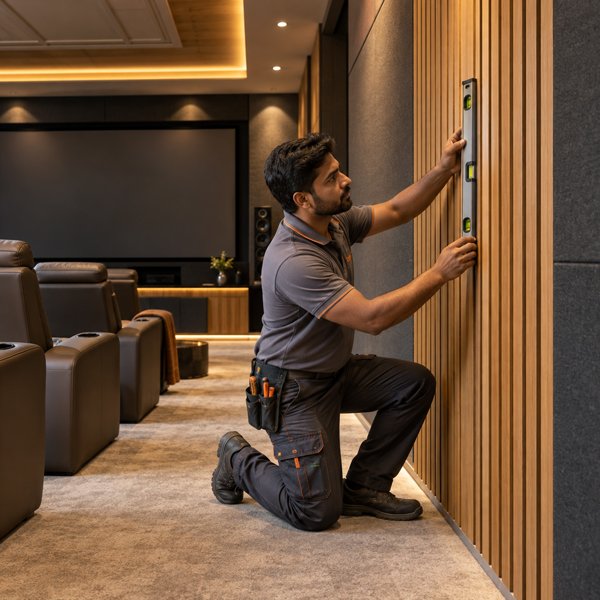
2. Acoustic Wall Treatments
Untreated surfaces can create unwanted sound reflections that make dialogue and effects less distinct. Carefully selected and positioned wall treatments help manage these reflections.
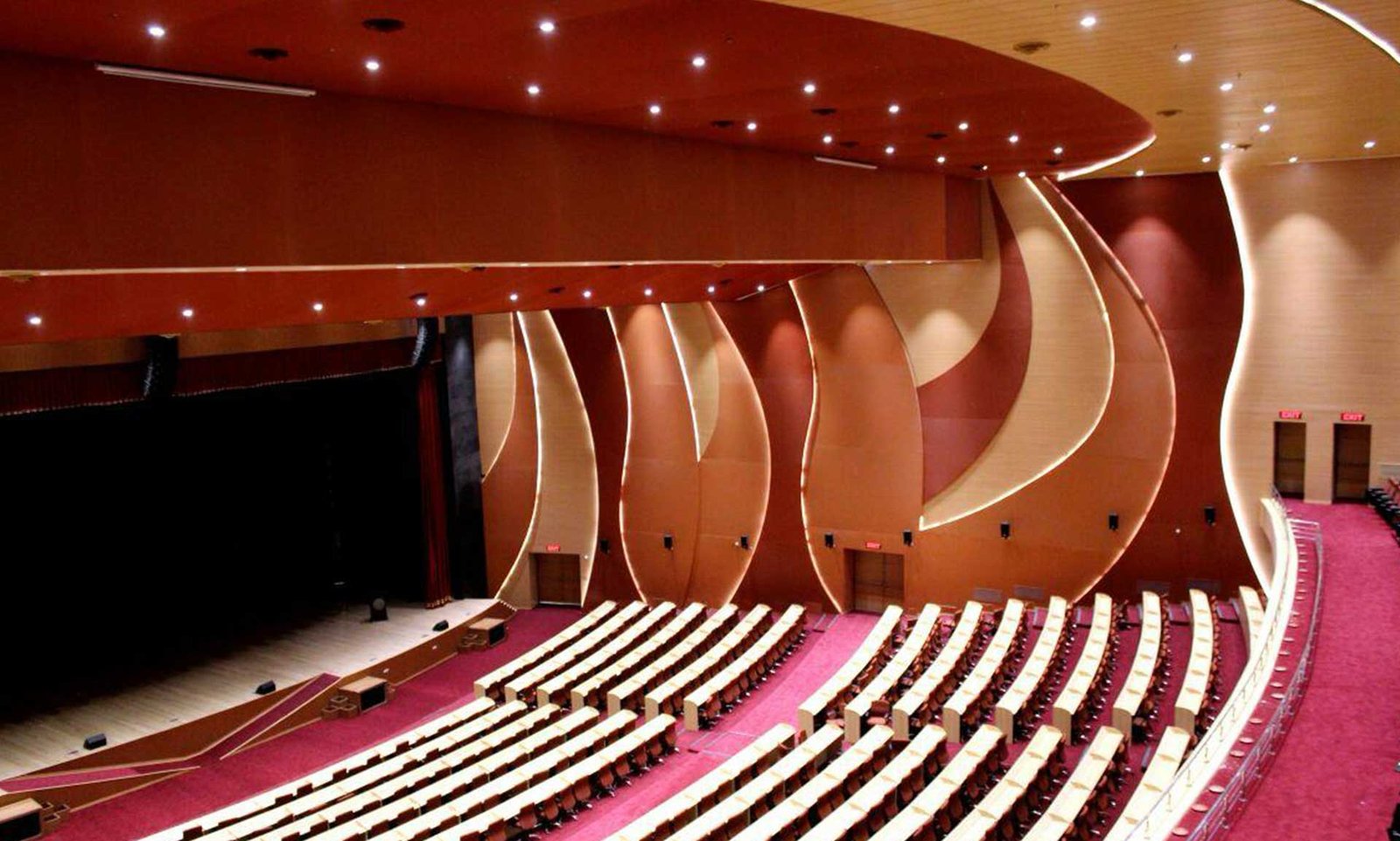
Fabric-covered panels and other acoustic finishes can also complement the auditorium’s visual design, combining sound control with an attractive interior.
3. Ceiling Treatment
The ceiling is an important part of the acoustic environment. Its shape, construction, and finish affect how sound reflects through the auditorium.
Suitable ceiling treatments work alongside wall finishes and seating to control reverberation—the lingering sound that remains after its source stops.
4. Low-Frequency Sound Control
Bass adds impact to action sequences and movie soundtracks. However, room-related bass build-up can make some seats sound boomy while others receive less bass.
Managing low-frequency sound requires coordinated consideration of room dimensions, subwoofer placement, construction, and appropriate acoustic treatment.
5. Audio System Integration
Acoustic treatment and audio equipment perform different but connected roles. Speaker positioning, coverage, and system calibration should work with the room’s layout and finishes.
A coordinated approach helps deliver clear dialogue and a more consistent listening experience across the seating area.
Comfort Beyond the Soundtrack
Cinema comfort also depends on controlling unwanted background noise. Air-conditioning systems, equipment vibration, corridors, and entrances can introduce distractions during quieter scenes.
Considering these sources early helps the design team coordinate ventilation, equipment placement, and access arrangements with acoustic requirements.
Design That Supports Performance
Multiplex interiors should balance acoustic performance with appearance, durability, maintenance, and applicable fire-safety requirements. Materials should be selected for their tested properties and suitability for the intended installation.
Planning these elements together helps acoustic features become an integrated part of the auditorium.
Our Approach at Stavera Build Tech
We begin by understanding the auditorium layout, neighbouring spaces, interior requirements, and intended audio setup. We then develop acoustic solutions suited to the project, coordinating wall treatments, ceiling systems, and audio/video integration.
Our focus is to create cinema spaces where thoughtful design supports clear sound and audience comfort.
Build a Better Cinema Experience
Planning a new multiplex or upgrading an existing auditorium? Stavera Build Tech can help you bring acoustics, interiors, and technology together.